I added a HelloFPGA Smart Artix target to my Ibex Demo System project. The board is built around the Xilinx Artix-7 XC7A50T-2FGG484I. This port brings up the Ibex-based RISC-V SoC on a different board while keeping the existing Arty and Nexys targets unchanged.
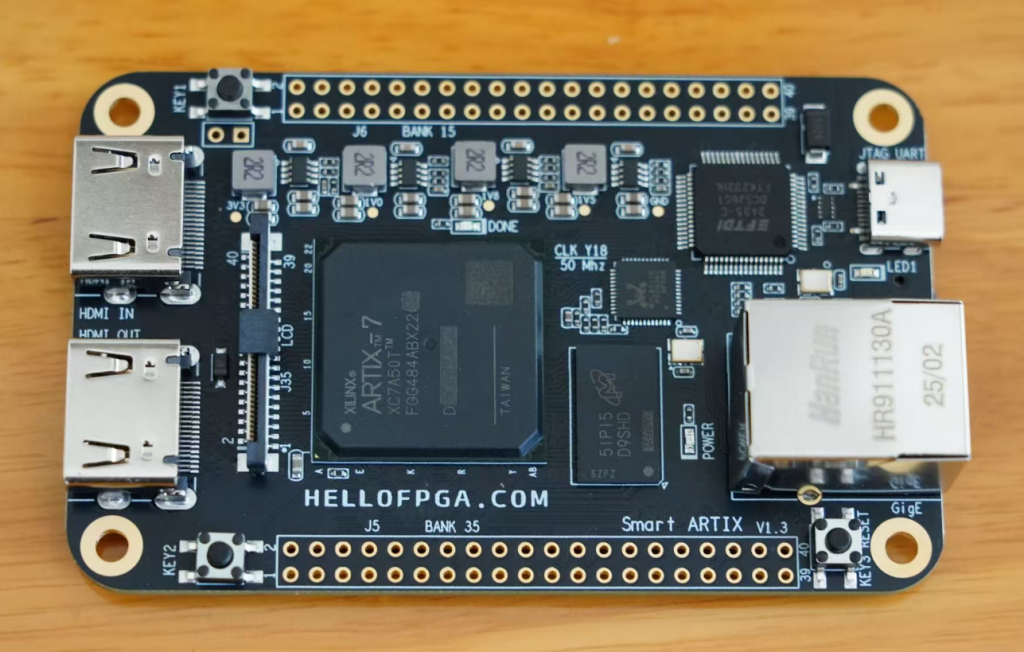
HelloFPGA Smart Artix board. Board photo from the project repository.
What the adaptation includes
- A board-specific top level and pin constraints for the 50 MHz clock, reset and buttons, LEDs, GPIO, UART, and QSPI configuration.
- A FuseSoC synthesis target for the XC7A50T, plus a small Vivado 2018.3 compatibility adjustment.
- A bring-up firmware example that toggles the LEDs and reports ticks and button state over the on-board FTDI UART.
- A packaging script that prepares the firmware and generated Vivado build scripts for use with Vivado on Windows.
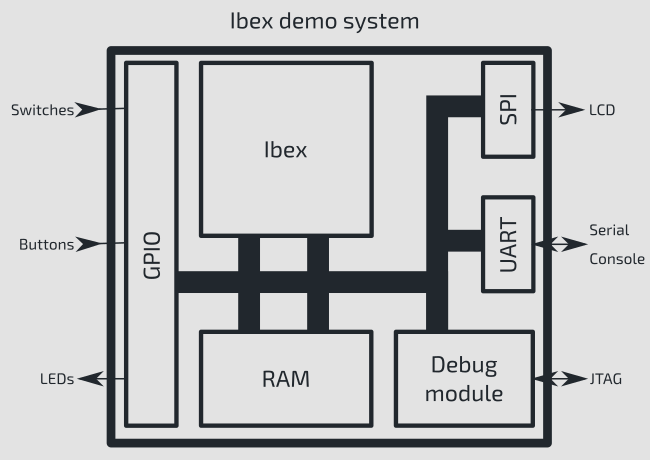
The demo SoC connects the Ibex CPU to RAM, GPIO, UART, SPI, timer, PWM, and debug components:
Build and status
The project provides a workflow to generate a Windows build package, build the FPGA image with Vivado 2018.3, and program a .bit file or QSPI flash image. The firmware is embedded in block RAM. The repository also includes a board-specific guide and example package. Its README notes that the OpenOCD configuration for this board has not been tested.
